
He’s sitting at his desk, staring at his cell phone. Another dropped call. One of his route drivers just disappeared into a dead zone again. He tries texting instead. No reply. He knows they’re driving, and honestly, he hates even asking them to use their phones. It’s clumsy. It’s distracting. In some places, it’s flat-out illegal. Yet somehow, this is still the tool he’s relying on to run his operation.
What really gets him is this: once those same drivers get close enough to the warehouse property, communication suddenly works. They are in range of the warehouse’s two-way radios. Clear audio. No dropped calls. No fumbling with screens. Push the button, talk, done. So why does that all have to fall apart a mile or so from the lot?
The answer, as it turns out, is that it doesn’t have to fall apart. And it’s not another app, carrier plan, or phone upgrade. It’s simply understanding what the process of renting radio towers in Indiana actually looks like and how it can extend reliable two-way radio communication far beyond the warehouse gates. This article walks through that process step by step, from concept to coverage.
Before diving into the process, however, it helps to understand what renting radio tower space actually provides.
Renting Radio Tower Space in Indiana Is Like Having Your Own Private Cellular System
When businesses first hear about a radio tower lease, they often picture something massive, complicated, and expensive. The reality is much simpler and far more flexible.
A properly configured private two-way radio tower system operates much like a private cellular network you control.
You decide the coverage you want. Maybe it’s along delivery routes. Perhaps it’s between job sites. Maybe it’s across multiple counties in Indiana. The tower (or towers) are selected to support that footprint instead of forcing you into someone else’s nationwide network.
You choose the radios your team uses. Some companies buy their equipment outright. Others prefer to rent units as part of their two-way radio tower space services, keeping upfront costs lower. Either approach works.
From there, costs tend to be predictable. You pay a competitive monthly fee for tower access and, if you’re renting equipment, a modest rental charge for the radios. There are no surprise overage fees. No throttling. No dropped calls due to carrier network congestion.
Most importantly, you stay in control. Your system. Your coverage. Your priorities. Once that concept clicks, the next question becomes practical: how do you actually get on a radio tower in Indiana?
Step-by-Step: The Process of Renting Radio Tower Space in Indiana
Step 1: Define Where Communication Needs to Work
Everything starts with geography.
A business must know where reliable communication is required before anyone raises the issue of towers, leases, or equipment. That may be a metropolitan region, a country highway, or a multi-county service area. Guessing at this point will lead to frustration later. This is where the professionals like RCS Communications come in. They help map coverage needs rather than theoretical needs, ensuring the chosen tower location supports your day-to-day operations.
Step 2: Match Coverage Needs to the Tower
Towers are not equal.
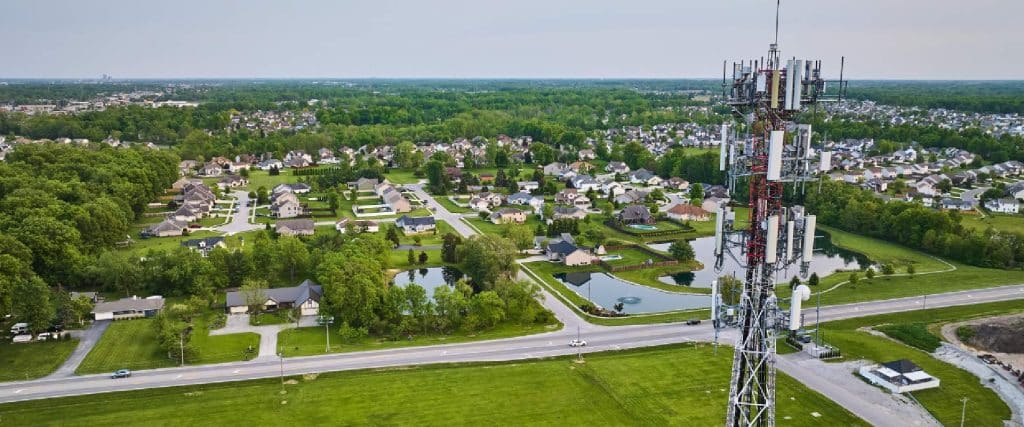
Tower height affects reach. The taller tower has a larger coverage area and is usually cleaner because buildings, trees, or terrain do not obstruct it. Tower height is critical to system performance in Indiana, where geography can shift from urban to agricultural to wooded within a very short distance. Choosing the wrong tower often means patchy coverage—or the need for additional sites later. Choosing the right one upfront avoids that.
Step 3: Confirm System Compatibility
This step quietly prevents many headaches.
Two-way radio systems operate on different bands and technologies. VHF, UHF, analog, and digital systems each have specific requirements. Not every tower supports every configuration. Before finalizing a two-way radio tower site rental in Indiana, the system itself needs to be matched to the tower’s capabilities. If adjustments are required, they’re made early, before you commit, not after problems show up.
Step 4: Understand the Lease Terms Before Signing
A radio tower lease is not just about space on steel.
Some agreements cover only physical placement. Others include maintenance, inspections, and support. Access rules matter too—especially when technicians need to service equipment or expand the system later. Clear expectations here protect both sides and prevent delays when changes are needed.
Step 5: Verify Licensing and Regulatory Compliance
This step is essential, even if it’s not exciting.
Radio towers must comply with FCC requirements and applicable state and local regulations. Frequencies must be appropriately licensed. Reputable two-way radio tower space operators handle this process as part of system deployment. However, you should ensure compliance before anything goes live.
Step 6: Plan for Maintenance and Reliability
Downtime costs money.
Before committing to a tower site, you should understand how maintenance is handled, how outages are addressed, and who is responsible for repairs. Reliable providers maintain regular inspection schedules and respond quickly when issues arise. Consistency in this area is what turns a communication system into a dependable operational tool rather than a constant source of worry.
Step 7: Decide Between Shared and Exclusive Use
Some towers host multiple users. Others are dedicated to a single organization.
Shared use can reduce costs and works well for many businesses. Exclusive use offers maximum performance and control. The right choice depends on communication volume, sensitivity, and growth expectations. There’s no universal answer—just the right fit for the operation.
Step 8: Leave Room for Growth
A “friendly” system doesn’t box you in.
As businesses grow, communication needs expand. More drivers. More sites. More coverage. A good tower rental agreement allows for those changes without forcing a complete contract rebuild or renegotiation from scratch. Thinking ahead here saves time and money later.
Why the Right Partner Makes the Process Easier
On paper, renting radio tower space in Indiana can look complicated. In practice, it doesn’t have to be. The key is working with professionals like RCS Communications who understand both the technical side and the business realities of two-way radio communication. When coverage planning, equipment selection, licensing, and leasing are handled together, the process is streamlined, and results are predictable.
For businesses tired of dropped calls, distracted drivers, and unreliable cellular coverage, a properly designed radio tower system offers something rare: communication that simply works. And for our guy at his desk, watching another call drop? RCS Communications can mean the difference between chasing drivers all day and finally being heard.
Trust RCS Communications to Simplify the Tower Space Rental Process
Clear communication shouldn’t disappear the moment your team leaves the property. If you’re ready to explore dependable two-way radio coverage across Indiana and beyond, it helps to work with people who do this every day.
RCS Communications is an authorized Motorola two-way radio provider with deep roots in Kentucky and Indiana, supporting businesses and public safety organizations for decades. Their team understands how on-site systems connect to wide-area networks and how to design radio solutions that actually work in the real world. From system planning and tower access to equipment, licensing, and long-term support, RCS Communications offers reliable voice and data solutions built around your operation, not a one-size-fits-all template.
If you’re ready to stop fighting dropped calls and start communicating with confidence, reach out to RCS Communications and talk through your options.
Rely On RCS Communications!